 EN
EN

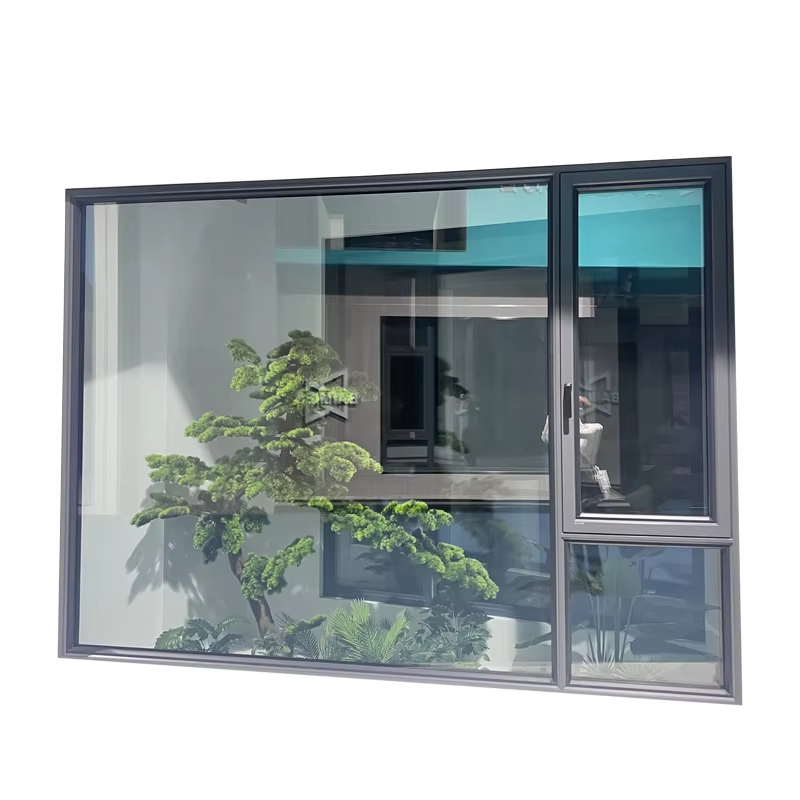
Contemporary architecture has evolved beyond mere functionality to embrace design philosophies that prioritize natural light, spatial clarity, and seamless integration with the surrounding environment. Within this transformation, the fixed window has emerged as an indispensable architectural element that defines modern building aesthetics while serving critical performance requirements. Unlike operable window systems, a fixed window remains permanently sealed within its frame, offering unobstructed views and structural integrity that align perfectly with contemporary design principles. The strategic importance of fixed windows extends far beyond their visual appeal, addressing fundamental concerns related to energy efficiency, structural performance, and architectural expression that characterize today's built environment.
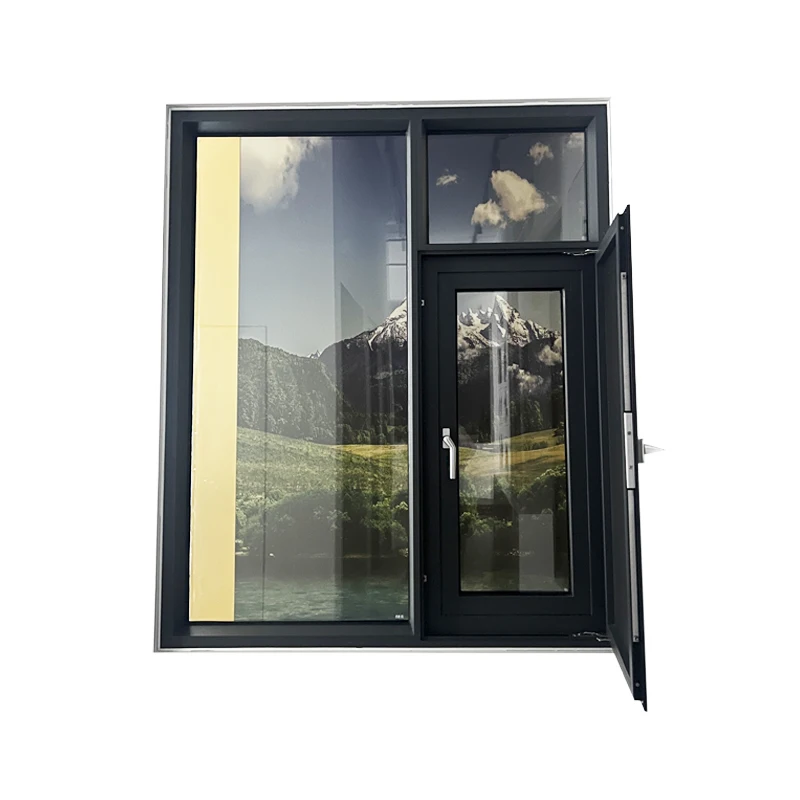
The architectural community has recognized that fixed windows represent more than passive glazing solutions; they function as carefully engineered components that influence building performance metrics, occupant comfort, and long-term maintenance considerations. As contemporary projects increasingly pursue certifications such as LEED, BREEAM, and Passive House standards, the selection of appropriate fenestration systems becomes a critical decision point. Fixed windows deliver measurable advantages in thermal performance, acoustic isolation, and weather resistance that directly contribute to achieving stringent building performance targets. Understanding why fixed windows have become essential requires examining their multifaceted contributions to contemporary architectural practice, from their role in maximizing daylight penetration to their capacity for creating dramatic design statements that define building identity.
Architectural Design Freedom and Visual Expression
Uninterrupted Sight Lines and Panoramic Views
The fixed window delivers unparalleled visual clarity by eliminating the mechanical hardware, operating mechanisms, and mullion divisions required by operable window systems. Contemporary architectural projects frequently prioritize expansive views that connect interior spaces with exterior landscapes, urban contexts, or dramatic natural settings. A fixed window installation can span considerable dimensions without the structural compromises inherent in operating systems, enabling architects to frame views with minimal visual obstruction. This capacity proves particularly valuable in residential projects featuring scenic locations, commercial buildings seeking to establish visual connections with urban environments, and institutional facilities designed to enhance occupant wellbeing through biophilic design principles.
Modern glazing technologies complement the visual advantages of fixed windows by offering exceptional clarity, low-iron compositions that eliminate color distortion, and advanced coatings that control solar heat gain without compromising transparency. The absence of operating hardware means that the entire glazed area contributes to the view, maximizing the effective visual aperture. In floor-to-ceiling applications, fixed windows create the perception of dissolved boundaries between interior and exterior spaces, a design objective central to contemporary architectural theory. Projects ranging from minimalist residential designs to corporate headquarters utilize fixed windows to establish visual relationships that would be impossible with traditional operable fenestration systems.
Streamlined Aesthetic Integration
Contemporary architecture emphasizes clean lines, minimal visual interruption, and cohesive material palettes that unify building facades. The fixed window serves these aesthetic priorities by presenting a flush, uncluttered appearance free from the handles, locks, hinges, and operating tracks that characterize movable window systems. This streamlined profile allows fixed windows to recede visually, directing attention to the views they frame rather than the fenestration system itself. Architects working within modernist and minimalist design vocabularies particularly value this quality, as it supports the visual continuity essential to their design language.
The structural simplicity of fixed windows also facilitates innovative facade compositions that would prove technically challenging or economically prohibitive with operable systems. Large-scale fixed glazing can be combined with strategic operable units to create hybrid facades that balance ventilation requirements with expansive transparent surfaces. This design flexibility enables architects to compose fenestration patterns that respond to specific programmatic needs, solar orientation considerations, and aesthetic intentions without uniform adherence to standardized operating window configurations. The result is facade designs that express architectural intent more directly while maintaining practical performance characteristics.
Geometric Flexibility and Custom Configurations
The fixed window offers exceptional geometric versatility, accommodating non-rectangular shapes, curved profiles, and custom configurations that extend beyond the limitations of operating window systems. Contemporary projects frequently incorporate angular geometries, parametric facade patterns, and sculptural building forms that require fenestration systems capable of following complex curves and irregular outlines. Fixed windows can be manufactured to precise custom specifications, enabling architects to realize design visions that demand specialized glazing solutions. This geometric freedom proves particularly valuable in signature architectural projects where building form serves as a primary design driver.
Advances in glass fabrication technology have expanded the possibilities for custom fixed window configurations, including curved glass units, faceted assemblies, and oversized panels that push the boundaries of conventional fenestration. These specialized applications demonstrate how fixed windows function as enabling technologies for architectural innovation, supporting design ambitions that require fenestration systems to adapt to unique formal requirements rather than constraining design to accommodate standardized window products. The absence of operating mechanisms removes significant technical constraints, allowing the fixed window to assume virtually any geometry that structural and fabrication considerations permit.
Superior Energy Performance and Thermal Efficiency
Enhanced Insulation and Reduced Air Infiltration
Energy efficiency represents a paramount concern in contemporary architecture, with building codes, green building standards, and client expectations all demanding demonstrable thermal performance. The fixed window excels in this domain by eliminating the air leakage pathways inherent in operable window systems. While even high-quality operating windows permit some air infiltration through weatherstripping interfaces and mechanical joints, a properly installed fixed window creates a continuous thermal barrier with minimal opportunity for uncontrolled air exchange. This characteristic translates directly to reduced heating and cooling loads, lower operational energy consumption, and improved occupant comfort through elimination of drafts and temperature stratification.
Building energy modeling consistently demonstrates that fixed windows outperform comparable operable units in thermal resistance measurements. The sealed construction allows for optimized insulating glass unit configurations, including triple glazing assemblies, low-emissivity coatings, and inert gas fills that maximize thermal performance without accommodation for operating hardware. In climate zones with extreme temperatures, whether hot or cold, the superior insulation value of fixed windows contributes measurably to achieving net-zero energy targets and passive house certification requirements. Projects pursuing ambitious energy performance goals typically specify fixed windows wherever natural ventilation is not operationally necessary, recognizing that thermal performance advantages justify the design decision.
Optimized Solar Heat Gain Management
Contemporary buildings must balance conflicting objectives: maximizing natural daylight while controlling unwanted solar heat gain that increases cooling loads. The fixed window supports sophisticated solar control strategies through its capacity to accommodate advanced glazing specifications without the dimensional constraints imposed by operating mechanisms. Low-solar-gain glazing systems, spectrally selective coatings, and dynamic electrochromic glass technologies can be specified in fixed window applications to precisely calibrate solar heat transmission according to orientation, climate zone, and building use patterns.
The permanent installation of fixed windows also enables integration with architectural shading devices, including exterior louvers, brise-soleil systems, and integrated shading that would interfere with operable window function. This design coordination allows architects to implement comprehensive solar control strategies that address both immediate thermal comfort and long-term energy performance. In commercial and institutional buildings where mechanical conditioning systems handle ventilation requirements, fixed windows with optimized solar control glazing deliver superior whole-building energy performance compared to mixed fenestration strategies that sacrifice thermal performance to accommodate natural ventilation capabilities that may receive limited operational use.
Condensation Resistance and Moisture Control
Moisture management within building envelopes represents a critical durability concern, with condensation on window surfaces indicating thermal bridge conditions that compromise energy performance and potentially lead to mold growth and material degradation. The fixed window construction minimizes thermal bridging by eliminating the metal-to-metal contact points and mechanical penetrations required by operating hardware. This thermal continuity reduces the likelihood of interior surface condensation, particularly important in high-humidity environments and buildings with high internal moisture generation.
Advanced fixed window systems incorporate thermally broken frame profiles, warm-edge spacer systems in insulating glass units, and continuous gasket sealing that collectively minimize heat transfer pathways through the fenestration assembly. These technical refinements enable fixed windows to maintain higher interior surface temperatures, reducing condensation risk even under severe temperature differentials. For contemporary projects in cold climates or applications such as natatoriums and commercial kitchens where moisture control is paramount, the superior condensation resistance of fixed windows provides measurable performance advantages that justify their specification over alternative fenestration approaches.
Structural Integrity and Long-Term Durability
Simplified Construction and Reduced Failure Points
The mechanical simplicity of a fixed window translates directly to enhanced reliability and reduced maintenance requirements over the building lifecycle. Operating window systems incorporate numerous moving parts, weatherstripping components, and mechanical linkages that represent potential failure points requiring periodic adjustment, lubrication, or replacement. By contrast, fixed windows contain no moving parts, eliminating an entire category of maintenance concerns and extending the functional service life of the fenestration system. This durability advantage proves particularly valuable in high-rise applications where window maintenance requires specialized access equipment and represents significant ongoing operational costs.
Contemporary architecture increasingly emphasizes lifecycle cost analysis and total cost of ownership rather than focusing exclusively on initial construction expenses. Within this evaluation framework, fixed windows demonstrate clear advantages through reduced maintenance requirements, lower probability of premature failure, and elimination of hardware replacement costs associated with operating mechanisms. Building owners and facility managers recognize these long-term economic benefits, particularly in commercial and institutional projects where fenestration system reliability directly impacts operational budgets and occupant satisfaction. The structural simplicity of fixed windows aligns with contemporary building management priorities that emphasize durability and reduced maintenance interventions.
Enhanced Weather Resistance and Performance Under Extreme Conditions
Contemporary buildings face increasingly severe weather events, with climate change contributing to more frequent extreme wind events, intense precipitation, and temperature extremes. The fixed window provides superior weather resistance compared to operable systems due to its continuous perimeter seal and absence of vulnerable operating mechanisms. Wind-driven rain, the primary cause of water intrusion in fenestration systems, finds fewer pathways through the sealed construction of fixed windows compared to the necessarily imperfect weatherstripping interfaces of operating units.
Testing protocols including ASTM standards for water penetration resistance, air infiltration, and structural loading consistently demonstrate that fixed windows outperform comparable operable units across all performance metrics. This enhanced weather resistance proves critical in coastal environments subject to hurricane-force winds, high-rise applications experiencing extreme wind pressures, and any location where fenestration system failure could compromise building envelope integrity. Contemporary architecture increasingly prioritizes resilience and adaptation to climate uncertainty, making the proven weather resistance of fixed windows an essential consideration in fenestration system selection.
Acoustic Isolation and Sound Transmission Control
Urban contemporary architecture must address increasingly stringent acoustic performance requirements to ensure occupant comfort in noise-impacted environments. The sealed construction of a fixed window inherently provides superior sound transmission class ratings compared to operable windows with their necessary gaps and weatherstripping interfaces. For projects adjacent to transportation corridors, in dense urban contexts, or serving noise-sensitive functions such as healthcare, education, or hospitality, the acoustic advantages of fixed windows may prove decisive in achieving required interior noise levels.
Advanced acoustic glazing systems, including laminated glass assemblies with specialized interlayers and asymmetric insulating glass unit configurations, can be readily incorporated into fixed window designs without accommodation for operating mechanisms. This specification flexibility enables acoustical consultants and architects to precisely calibrate sound transmission performance to meet project-specific requirements. The fixed window thus functions as an enabling technology for contemporary urban architecture, making viable building sites that would otherwise fail to meet habitability standards due to excessive exterior noise levels. This capacity to mitigate environmental noise expands site utilization possibilities and supports urban densification objectives central to sustainable development strategies.
Practical Implementation and Design Integration
Strategic Placement Within Hybrid Fenestration Systems
Contemporary architectural practice recognizes that optimal building performance typically results from strategic combinations of fixed and operable fenestration rather than exclusive reliance on either approach. Intelligent design methodology places fixed windows in locations where their performance advantages provide maximum value while incorporating operable units where natural ventilation, emergency egress, or operational flexibility justify their specification. This hybrid strategy enables architects to optimize for multiple performance criteria simultaneously, balancing energy efficiency, view quality, ventilation provision, and cost considerations.
Fixed windows typically occupy prime view locations, areas with extreme exposure conditions, high-security zones, and positions where operational access would prove difficult or hazardous. In multi-story residential buildings, for example, fixed windows might provide expansive views in living areas while operable units ensure code-compliant ventilation in bedrooms and support fire safety egress requirements. Commercial office buildings commonly employ fixed vision glass along primary facades to maximize daylight and views while incorporating operable windows in locations supporting natural ventilation strategies. This nuanced approach to fenestration design reflects the sophisticated performance optimization characteristic of contemporary architectural practice.
Integration With Building Systems and Environmental Controls
The specification of fixed windows influences and is influenced by broader building systems decisions, particularly regarding mechanical ventilation, daylighting control, and environmental conditioning strategies. Contemporary projects increasingly employ integrated design processes that coordinate fenestration selection with HVAC system sizing, lighting design, and building automation strategies. Fixed windows support these integrated approaches by providing predictable, high-performance envelope components that enable accurate energy modeling and system optimization.
In mechanically ventilated buildings, the superior thermal performance of fixed windows reduces peak heating and cooling loads, enabling downsized mechanical equipment with corresponding reductions in first costs, operational energy consumption, and spatial requirements for mechanical systems. The elimination of operable windows also simplifies building automation by removing the unpredictability introduced when occupants manually control fenestration, potentially compromising optimized mechanical system operation. For contemporary projects pursuing advanced environmental control strategies, including demand-controlled ventilation, radiant conditioning systems, and heat recovery ventilation, the consistent envelope performance provided by fixed windows represents an enabling technology that supports sophisticated environmental systems integration.
Code Compliance and Safety Considerations
Building codes establish specific requirements regarding emergency egress, ventilation provision, and fall protection that influence fixed window specification and placement. Contemporary architectural practice requires thorough understanding of applicable code provisions to ensure that fixed window applications comply with jurisdictional requirements while achieving design objectives. In residential occupancies, codes typically mandate minimum operable window areas in sleeping rooms for emergency egress, limiting but not eliminating opportunities for fixed window application in other spaces and even within bedroom designs where fixed units complement code-required operable windows.
Fall protection requirements particularly influence fixed window design in applications where glazing extends to or near floor level. Contemporary architecture frequently employs floor-to-ceiling glazing to maximize views and spatial transparency, necessitating careful integration of guardrail systems or structural glass assemblies that meet code-mandated impact resistance and loading requirements. Fixed windows accommodate these safety systems more readily than operable units, as the permanent installation facilitates structural integration with protective barriers. Understanding these regulatory frameworks enables architects to leverage fixed windows effectively while ensuring full code compliance and occupant safety.
FAQ
Can fixed windows provide adequate natural ventilation for residential spaces?
Fixed windows do not provide natural ventilation themselves, as they remain permanently sealed within their frames. Contemporary residential design addresses ventilation requirements through strategic placement of operable windows in conjunction with fixed units, creating hybrid systems that balance view quality and thermal performance with necessary air exchange. Alternatively, mechanical ventilation systems including heat recovery ventilators can provide controlled fresh air supply while allowing maximum use of fixed windows. Building codes specify minimum ventilation requirements that must be satisfied through operable fenestration, mechanical systems, or approved combinations thereof.
How do fixed windows compare in cost to operable window systems?
Fixed windows typically cost less than comparable operable units when evaluated on a per-square-foot basis, as they eliminate expensive operating hardware, weatherstripping systems, and the labor-intensive installation and adjustment procedures required for moving components. However, total project costs depend on the specific fenestration strategy employed, with some designs requiring additional operable units to meet ventilation requirements that might otherwise be reduced. Lifecycle cost analysis generally favors fixed windows due to minimal maintenance requirements and superior long-term durability compared to operating mechanisms that require periodic service and eventual replacement.
What size limitations apply to fixed window installations?
Fixed windows can be manufactured in substantially larger sizes than operable units, as the absence of operating mechanisms eliminates functional weight and dimensional constraints. Practical limitations relate to glass manufacturing capabilities, transportation logistics, installation methodology, and structural considerations including wind loading and seismic requirements. Contemporary glass fabrication technology enables fixed window panels exceeding 100 square feet in single units, with even larger assemblies achievable through structural silicone glazing and curtain wall systems. Specific size limitations depend on frame material, glazing specifications, installation conditions, and applicable structural engineering requirements for the particular application.
Do fixed windows require special maintenance compared to standard windows?
Fixed windows require substantially less maintenance than operable window systems, as they contain no moving parts, operating hardware, or weatherstripping components that require adjustment or replacement. Routine maintenance consists primarily of periodic glass cleaning and inspection of perimeter sealants to ensure continued weather-tightness. Unlike operable windows that may require lubrication of hinges, adjustment of locking mechanisms, and replacement of degraded weatherstripping, fixed windows maintain their performance characteristics with minimal intervention throughout their service life. This reduced maintenance requirement represents a significant lifecycle advantage in both residential and commercial applications.