 EN
EN

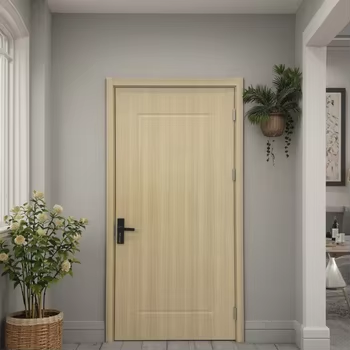
When selecting door materials for residential or commercial projects, property developers, contractors, and facility managers increasingly face a critical decision between traditional wood doors and modern composite alternatives. Wood-Plastic Composite doors, commonly known as wpc doors, have emerged as a compelling option that challenges conventional assumptions about door performance, longevity, and lifecycle costs. Understanding the specific advantages that wpc doors deliver compared to traditional wood requires examining material composition, structural performance characteristics, environmental resistance factors, and long-term economic implications that directly impact project budgets and building maintenance strategies.
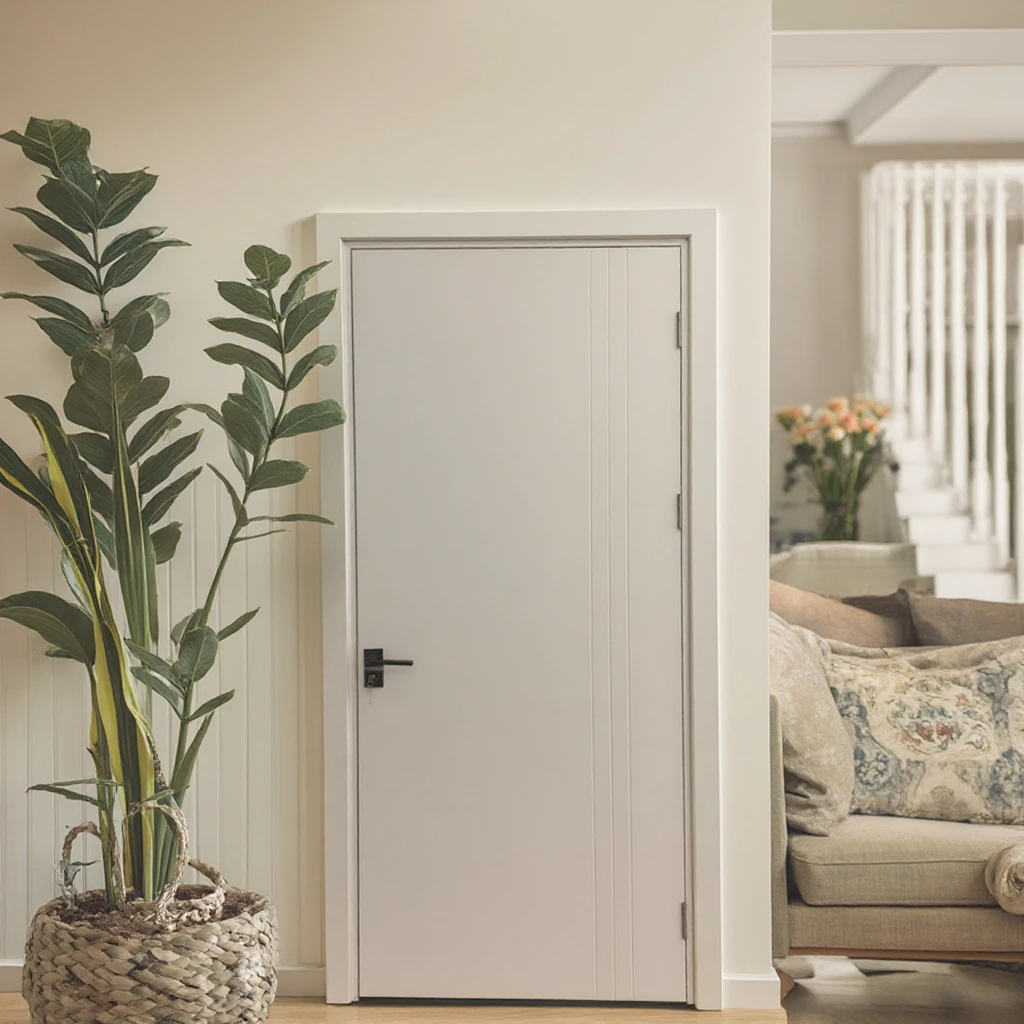
Traditional wood doors have served construction markets for centuries, offering natural aesthetic appeal and established installation practices. However, inherent limitations in dimensional stability, moisture susceptibility, and maintenance requirements have prompted industry professionals to evaluate engineered alternatives that address these shortcomings while preserving desirable appearance qualities. The fundamental question for decision-makers centers not merely on material differences, but on how those differences translate into measurable performance advantages across installation phases, operational lifespan, and total cost of ownership in diverse climate conditions and application environments.
Superior Moisture Resistance and Dimensional Stability
Fundamental Material Composition Differences
The core advantage of wpc doors stems from their engineered material matrix that combines wood fibers with thermoplastic polymers through advanced extrusion or compression molding processes. This composite structure creates a homogeneous material that distributes moisture exposure across polymer-encapsulated wood particles, preventing the localized water absorption that causes traditional wood doors to swell, warp, and degrade. Natural wood doors contain cellular structures with directional grain patterns that absorb moisture unevenly, creating internal stresses that manifest as dimensional changes, surface checking, and joint separation over time.
The polymer component in wpc doors functions as a continuous phase that surrounds wood particles, creating a barrier against liquid water penetration while allowing minimal vapor transmission. This molecular-level protection mechanism ensures that wpc doors maintain consistent dimensions across humidity fluctuations ranging from 20% to 90% relative humidity, whereas solid wood doors typically expand 2-4% across grain direction under similar conditions. For coastal installations, basement applications, and tropical climate zones, this moisture stability translates directly into reduced service calls, fewer replacement cycles, and maintained operational clearances that prevent binding or dragging throughout seasonal transitions.
Performance in High-Humidity Environments
Bathroom doors, kitchen entries, and exterior-facing installations expose door materials to persistent humidity levels that accelerate deterioration in traditional wood products. Testing data from accelerated weathering protocols demonstrates that wpc doors retain structural integrity and surface finish quality after 1000-hour salt spray exposure and cyclic humidity conditioning, while comparable wood doors exhibit surface degradation, finish delamination, and measurable thickness swell. The practical implication for building operators involves extended service intervals and reduced maintenance labor allocation for door hardware adjustment and finish restoration.
Commercial facilities with high-traffic wet areas particularly benefit from wpc doors because the material resists the cumulative damage caused by repeated wetting and drying cycles. Traditional wood doors in these applications typically require refinishing every 18-24 months and complete replacement within 5-7 years, whereas properly manufactured wpc doors maintain appearance and function for 15-20 years with minimal intervention. This performance differential becomes especially significant in hospitality projects, healthcare facilities, and multi-family residential buildings where door replacement logistics involve tenant disruption, access coordination, and revenue impact beyond simple material costs.
Elimination of Expansion and Contraction Issues
Architects and contractors familiar with wood door installation know that seasonal expansion requires careful clearance specification, with typical recommendations calling for 3-5mm gaps around door perimeters to accommodate dimensional changes. These clearances create drafts, light leakage, and acoustic transmission paths that compromise building envelope performance and occupant comfort. Wood-Plastic Composite doors maintain dimensional tolerances within 0.5mm across operational temperature and humidity ranges, allowing tighter installation clearances that improve thermal efficiency, sound attenuation, and weather sealing without risk of binding during humid periods.
The stable dimensions of wpc doors also simplify hardware installation and alignment procedures. Locksets, hinges, and closing mechanisms maintain proper geometry throughout service life, reducing callback rates for hardware adjustment that plague wood door installations. For property managers overseeing large door populations, this stability translates into predictable maintenance budgets and reduced emergency service requirements that occur when wood doors swell beyond operational clearances during seasonal humidity peaks.
Enhanced Durability and Damage Resistance
Impact Resistance and Structural Integrity
High-traffic commercial environments and residential applications with active occupants subject doors to impacts, abrasion, and mechanical stresses that test material toughness. The composite structure of wpc doors distributes impact energy across a homogeneous matrix rather than concentrating stress at grain boundaries or weak points inherent in natural wood. Independent testing following ASTM D5420 protocols shows that quality wpc doors withstand 150-200 joules of impact energy without surface cracking or core damage, compared to 80-120 joules for solid wood doors before visible damage occurs.
This superior impact resistance particularly benefits institutional applications including schools, healthcare facilities, and commercial offices where equipment carts, furniture movement, and occupant traffic create regular contact events. Traditional wood doors in these settings develop surface dents, edge damage, and veneer delamination that require cosmetic repair or complete replacement to maintain professional appearance standards. The resilient surface of wpc doors absorbs minor impacts without permanent deformation, preserving aesthetic quality throughout extended service periods without refinishing requirements.
Termite and Insect Resistance
Geographic regions with active termite populations face significant challenges with traditional wood doors, as these materials provide attractive food sources for subterranean and drywood termite species. Annual treatment costs, periodic inspections, and eventual replacement of infested wood doors create ongoing expense streams that property owners must factor into lifecycle budgets. Wood-Plastic Composite doors incorporate polymer content that renders the wood fiber component unpalatable and nutritionally unsuitable for termite consumption, effectively eliminating infestation risk without requiring chemical treatment applications.
The termite resistance of wpc doors extends beyond the door slab itself to include jamb assemblies and trim components when specified in matching composite materials. This comprehensive protection proves particularly valuable in tropical and subtropical construction markets where termite pressure remains constant and wood preservation treatments eventually degrade, leaving structures vulnerable. For developers working in termite-prone regions, specifying wpc doors eliminates a significant long-term liability while reducing insurance premiums and warranty exposure associated with insect damage claims.
Resistance to Rot, Decay, and Fungal Growth
Biological degradation represents a primary failure mode for traditional wood doors exposed to moisture, particularly in applications where water contact or condensation occurs regularly. Wood-destroying fungi require specific moisture content levels, oxygen availability, and cellulose food sources to colonize and decompose wood materials. The polymer encapsulation in wpc doors prevents sustained moisture absorption that enables fungal establishment, while the modified wood component resists enzymatic breakdown even when moisture is present. Laboratory testing following ASTM G21 fungal resistance protocols confirms that properly formulated wpc doors receive zero-growth ratings after extended exposure to aggressive fungal species.
Practical applications where this resistance delivers measurable advantages include coastal installations subject to salt spray and humidity, basement doors exposed to foundation moisture, and climate-controlled facility entries where condensation forms during temperature differentials. Traditional wood doors in these locations develop surface mold, internal decay, and structural weakening that compromise security, appearance, and operational reliability. The biological inertness of wpc doors ensures consistent performance regardless of moisture exposure patterns, eliminating the premature failure modes that truncate service life in challenging environmental conditions.
Reduced Maintenance Requirements and Lifecycle Costs
Elimination of Periodic Refinishing
Traditional wood doors require protective finish systems that degrade under ultraviolet exposure, abrasion, and chemical contact, necessitating refinishing cycles every 2-4 years depending on exposure severity and traffic levels. This maintenance requirement involves labor-intensive surface preparation, multiple coating applications, and facility disruption during curing periods. For commercial properties managing dozens or hundreds of doors, the cumulative labor cost, material expense, and coordination burden of systematic refinishing programs represents a substantial operational expense that persists throughout building lifespan.
Modern wpc doors incorporate through-color pigmentation and surface treatments that maintain appearance without refinishing requirements. The color stability of quality polymer components ensures that fading remains minimal even in direct sunlight exposure, while surface hardness resists the wear patterns that develop on painted or stained wood surfaces. Facility managers can clean wpc doors using standard detergents and water without concern for finish damage, whereas wood door finishes require specific cleaning agents and techniques to prevent degradation. This maintenance simplification reduces both direct costs and the organizational complexity of scheduling and executing preservation programs across large door populations.
Reduced Hardware Maintenance and Adjustment
The dimensional stability of wpc doors directly influences hardware performance and maintenance requirements throughout service life. Traditional wood doors experience seasonal expansion that throws locksets out of alignment, places stress on hinge screws, and causes strike plate misalignment that prevents proper latching. These dimensional changes generate service calls for hardware adjustment, screw tightening, and strike plate repositioning that recur with seasonal cycles. Property maintenance teams familiar with wood door behavior typically budget 15-20 minutes per door annually for hardware-related adjustments.
Wood-Plastic Composite doors maintain consistent geometry that preserves initial hardware installation specifications, eliminating recurring adjustment requirements and extending hardware component lifespan. Locksets maintain proper backset dimensions, hinges experience uniform loading without seasonal stress variations, and strike plates remain aligned with latch bolts throughout operational life. For large facilities, this maintenance reduction translates into measurable labor savings and improved door reliability that reduces occupant complaints and emergency service demands. The stable platform that wpc doors provide also enables use of more sophisticated access control hardware and automated closing systems that require precise alignment for reliable operation.
Long-Term Cost Comparison Analysis
Comprehensive lifecycle cost analysis requires evaluating initial acquisition expense, installation labor, recurring maintenance costs, replacement frequency, and disposal considerations across realistic service periods. While quality wpc doors typically command 15-25% higher initial purchase prices compared to mid-grade wood doors, this premium diminishes rapidly when amortized across extended service life. A properly specified wpc door system delivers 15-20 year service life with minimal maintenance, compared to 8-12 years for traditional wood doors requiring periodic refinishing and higher replacement frequency.
Financial modeling for a typical commercial facility with 50 interior doors demonstrates that wpc door specification generates 30-40% lower total cost of ownership over a 20-year analysis period, even accounting for higher initial investment. These savings derive from eliminated refinishing cycles, reduced hardware maintenance, extended replacement intervals, and avoided costs associated with premature failure and emergency replacement. For developers and property owners focused on net present value optimization rather than simple first-cost minimization, wpc doors represent a financially superior specification that improves project returns while reducing operational risk and management burden.
Environmental Performance and Sustainability Advantages
Reduced Demand on Virgin Wood Resources
Global forest conservation concerns and sustainable building certifications increasingly influence material selection decisions in construction projects. Traditional wood doors utilize solid lumber or veneer products that require harvesting mature trees, with premium species like oak, mahogany, and cherry facing particular pressure from extraction rates exceeding regeneration capacity in many regions. Wood-Plastic Composite doors incorporate recycled wood fiber content ranging from 40-70% of total composition, sourcing material from sawmill residue, furniture manufacturing waste, and post-consumer wood products that would otherwise enter landfill streams.
This material efficiency extends forest resources while maintaining aesthetic qualities that building occupants associate with natural wood products. Manufacturers producing wpc doors can texture surface patterns, apply wood-grain embossing, and match color tones that replicate traditional wood species appearance without consuming the corresponding virgin timber resources. For projects pursuing LEED certification, BREEAM compliance, or other green building recognition programs, wpc doors contribute to recycled content credits and responsible sourcing requirements that support certification achievement and demonstrate environmental stewardship commitments.
Lower Embodied Energy and Carbon Footprint
Manufacturing processes for traditional wood doors involve timber harvesting, transportation, kiln drying, milling, assembly, and finish application stages that collectively consume significant energy and generate substantial carbon emissions. Kiln drying alone requires reducing lumber moisture content from 25-30% to 8-12%, consuming approximately 800-1200 kWh of thermal energy per cubic meter of dried wood. Wood-Plastic Composite manufacturing utilizes extrusion or compression molding processes that operate at lower temperatures than kiln drying, while recycled material content reduces energy demands associated with virgin raw material production.
Lifecycle assessment studies comparing wpc doors to traditional wood doors indicate 20-35% lower embodied carbon when accounting for material extraction, processing, transportation, and end-of-life considerations. This carbon advantage compounds when extended service life is factored into analysis, as the reduced replacement frequency of wpc doors means fewer manufacturing cycles and transportation events over building lifespan. Organizations with carbon reduction targets and sustainability reporting requirements can document measurable emissions reductions by specifying wpc doors in place of traditional wood alternatives across their facility portfolios.
End-of-Life Recyclability and Waste Reduction
Traditional wood doors reaching end of service life typically enter construction waste streams destined for landfill disposal or incineration, with limited recovery value except for unfinished solid wood components suitable for grinding into landscape mulch. Painted or stained wood doors cannot enter clean wood recycling streams due to coating contamination, creating disposal challenges and tipping fees for building owners. Quality wpc doors manufactured from thermoplastic polymers can be ground and reprocessed into new composite products, recovering material value and diverting waste from landfills.
Some wpc door manufacturers operate take-back programs that accept obsolete doors for reprocessing, creating closed-loop material flows that align with circular economy principles increasingly emphasized in corporate sustainability strategies. This recyclability consideration proves particularly relevant for large property portfolios undergoing periodic renovation cycles, where door replacement generates significant waste volumes. The ability to recover value from removed wpc doors through recycling programs provides both environmental benefits and potential cost offsets that improve project economics while supporting waste reduction goals.
Design Flexibility and Aesthetic Options
Consistent Appearance and Color Matching
Traditional wood doors exhibit natural color variation between individual doors, between production batches, and over time as wood tones oxidize and finishes age at different rates depending on light exposure. This variability creates challenges for maintaining consistent appearance across large installations and complicates replacement door matching when individual units require service. Architects specifying wood doors for projects with hundreds of identical units must accept visual inconsistency or implement expensive batch-matching protocols that increase procurement complexity and material costs.
Manufacturing processes for wpc doors enable precise color control through polymer pigmentation systems that deliver batch-to-batch consistency and eliminate the natural variation inherent in wood materials. Projects requiring uniform appearance across extensive door populations achieve reliable color matching that persists throughout service life, as polymer-based colorants resist fading and tone shifting more effectively than wood stains and finishes. This consistency simplifies specification, reduces field rejection rates due to appearance mismatches, and ensures that replacement doors installed years after original construction integrate seamlessly with existing units.
Surface Texture and Finish Customization
Modern manufacturing techniques applied to wpc doors enable surface texture replication that captures the tactile qualities of natural wood grain patterns, including the dimensional depth of raised grain and the visual variation of cathedral and straight-grain appearances. Three-dimensional embossing processes transfer wood texture patterns onto wpc door surfaces during molding operations, creating authentic-looking grain that satisfies aesthetic requirements without the dimensional instability of actual wood grain. This capability allows wpc doors to meet design intent for traditional architectural styles while delivering the performance advantages of composite construction.
Beyond wood-grain replication, wpc doors accommodate smooth contemporary finishes, brushed textures, and custom surface treatments that expand design possibilities beyond natural wood limitations. The moldable nature of composite materials enables panel profiles, decorative reveals, and dimensional details that would require complex joinery and assembly operations in traditional wood door construction. Designers working on projects with specific aesthetic requirements can collaborate with wpc door manufacturers to develop custom surface treatments and profiles that differentiate projects while maintaining the material performance advantages that justify composite door specification.
Integration with Modern Hardware and Systems
Contemporary building access control systems, automated door operators, and integrated security hardware require stable mounting platforms and consistent dimensional tolerances for reliable long-term operation. Traditional wood doors present challenges for sophisticated hardware integration due to seasonal movement that affects alignment, moisture-driven screw loosening, and material density variations that compromise fastener holding strength. The homogeneous structure and dimensional stability of wpc doors provide ideal platforms for mounting electronic access control hardware, electromagnetic locks, and automated closing mechanisms that demand precise positioning and stable attachment points.
The consistent density and screw-holding characteristics of quality wpc doors enable reliable hardware installation using standard fasteners and mounting techniques, without the splitting and grain-direction considerations that complicate wood door hardware installation. This compatibility with modern building systems proves particularly valuable in commercial and institutional applications where access control integration, fire alarm coordination, and building automation connectivity require reliable door operation and hardware performance. The technical advantages of wpc doors extend beyond basic material performance to encompass system-level benefits that improve overall building functionality and operational efficiency.
FAQ
How long do wpc doors typically last compared to traditional wood doors?
Quality wpc doors deliver service life ranging from 15-20 years with minimal maintenance requirements, significantly exceeding the 8-12 year typical lifespan of traditional wood doors in similar applications. This extended durability results from superior moisture resistance, dimensional stability, and immunity to biological degradation that causes premature failure in wood doors. The actual service life depends on application conditions, installation quality, and product grade, but properly specified wpc doors consistently outlast wood alternatives in both interior and exterior-facing installations while requiring substantially less maintenance intervention throughout their operational lifespan.
Can wpc doors be used in exterior applications and weather-exposed locations?
Modern wpc doors designed for exterior use incorporate enhanced polymer formulations with UV stabilizers, impact modifiers, and weathering additives that enable reliable performance in outdoor applications. These specialized exterior-grade wpc doors resist direct sunlight exposure, precipitation, temperature extremes, and wind loading while maintaining dimensional stability and appearance quality. However, specification requires careful product selection to ensure the particular wpc door formula includes exterior-rated components, as interior-grade composite doors may not contain adequate weather-resistant additives. Manufacturers provide application guidance and performance specifications that identify which wpc door products suit exterior installations versus interior-only applications.
Do wpc doors require special installation techniques or tools?
Installation of wpc doors follows standard door hanging procedures using conventional tools and techniques familiar to experienced carpenters and installers. The stable dimensions of wpc doors actually simplify installation compared to wood doors by eliminating concerns about seasonal expansion clearances and moisture-driven dimensional changes during storage and installation. Standard woodworking tools including circular saws, routers, and drills effectively cut and shape wpc door materials, though manufacturers recommend carbide-tipped cutting tools for extended tool life. Hardware installation follows normal procedures with standard screws and fasteners, and wpc doors accept hinges, locksets, and closing devices using typical mounting practices without special considerations beyond following manufacturer specifications for hardware placement and fastener selection.
How do wpc doors compare in cost to traditional wood doors?
Initial purchase prices for quality wpc doors typically range 15-25% higher than mid-grade traditional wood doors, though this premium diminishes when comparing wpc doors to premium hardwood species or high-end wood door systems. The financial advantage of wpc doors emerges through lifecycle cost analysis that accounts for extended service life, eliminated refinishing requirements, reduced maintenance labor, and lower replacement frequency over multi-decade evaluation periods. Total cost of ownership calculations consistently demonstrate 30-40% savings for wpc doors compared to traditional wood alternatives when analyzed across realistic 15-20 year timeframes. Organizations focused on optimizing long-term value rather than minimizing initial expenditure find that wpc door specification delivers superior financial returns while reducing operational burden and management complexity associated with ongoing door maintenance programs.