 EN
EN


When it comes to building safety and compliance, steel fire exit doors represent one of the most critical components in any commercial or industrial facility. These specialized doors must meet stringent requirements to ensure they can withstand extreme temperatures while providing safe egress during emergencies. Understanding the hardware requirements for steel fire exit doors is essential for architects, contractors, and facility managers who need to specify, install, and maintain these life-safety systems properly.
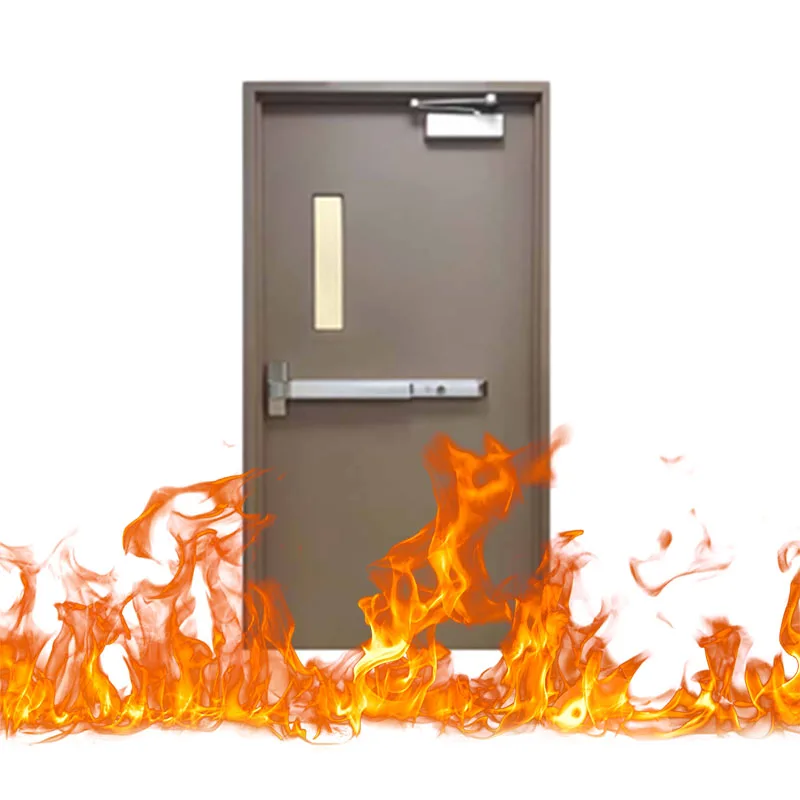
The hardware components used on steel fire exit doors must work together as an integrated system to maintain the door's fire rating while ensuring reliable operation under normal and emergency conditions. Each piece of hardware plays a crucial role in the overall performance of the door assembly, from the hinges that support the door's weight to the panic hardware that enables quick egress during an emergency evacuation.
Essential Hardware Components for Fire Rating Compliance
Fire-Rated Hinges and Their Specifications
Fire-rated hinges form the foundation of any steel fire exit door system, as they must maintain structural integrity throughout the duration of a fire test. These hinges are typically constructed from steel with specific gauge requirements and must be tested and listed by recognized testing laboratories such as UL or Intertek. The most common configurations include ball bearing hinges for heavy-duty applications and plain bearing hinges for standard installations.
The number and size of hinges required depend on the door's dimensions, weight, and frequency of use. Standard steel fire exit doors typically require three hinges, with each hinge rated to handle the door's weight plus additional safety factors. Heavy-duty applications may require four or more hinges, particularly for oversized doors or those subject to high-frequency use in commercial environments.
Hinge pins must be non-removable from the secure side of the door to prevent unauthorized removal. Additionally, all hinges must be installed with fire-rated screws that match the door's fire rating duration. The proper installation of fire-rated hinges is crucial because improperly mounted hardware can compromise the entire door assembly's fire rating.
Lock Sets and Latching Mechanisms
Lock sets for steel fire exit doors must balance security requirements with life safety codes that mandate free egress during emergencies. Fire-rated lock sets are available in various configurations, including mortise locks, cylindrical locks, and electromagnetic locks, each designed to maintain their fire rating while providing appropriate security levels for different applications.
Mortise lock sets are commonly preferred for steel fire exit doors due to their robust construction and ability to integrate with various access control systems. These locks feature heavy-duty cases that can withstand the thermal expansion and contraction that occurs during fire conditions. The lock body, strike plate, and all associated hardware must carry the same fire rating as the door assembly.
Electromagnetic locks present unique challenges for steel fire exit doors because they must be programmed to release automatically during fire alarm activation or power failure. These systems require backup power supplies and fail-safe mechanisms to ensure that occupants can always exit the building during an emergency, regardless of the lock's power status.
Panic Hardware and Exit Device Requirements
Panic Bar Specifications and Installation
Panic hardware, also known as crash bars or exit devices, is mandatory on steel fire exit doors in most commercial applications where the occupant load exceeds specific thresholds. These devices must allow for immediate egress by applying pressure in the direction of travel, without requiring any prior knowledge of the door's operation or the use of keys, tools, or excessive force.
Fire-rated panic hardware must undergo the same rigorous testing as the door assembly itself, ensuring that all components continue to function properly throughout the fire test duration. The panic bar mechanism must remain operable even when subjected to extreme temperatures, and the latching mechanism must maintain its integrity to prevent the door from opening due to thermal expansion or building movement.
Installation of panic hardware on steel fire exit doors requires precise alignment and proper adjustment to ensure smooth operation and code compliance. The panic bar must be mounted at the correct height, typically between 34 and 48 inches above the floor, and the strike mechanism must be properly aligned to prevent binding or excessive wear that could compromise emergency egress.
Emergency Exit Hardware Integration
Modern steel fire exit doors often incorporate sophisticated emergency exit hardware that integrates with building fire alarm systems, access control systems, and emergency notification systems. This integration ensures that doors unlock automatically when fire alarms activate, while maintaining security during normal operations.
Delayed egress hardware is sometimes permitted on steel fire exit doors in specific applications where security is paramount, such as in healthcare facilities or secure areas. However, these systems must comply with strict code requirements, including maximum delay times, alarm activation upon unauthorized use, and automatic release during fire alarm conditions.
The electrical components of integrated emergency exit hardware must be properly protected and rated for the environmental conditions they will encounter. This includes considerations for temperature extremes, humidity, and potential exposure to fire suppression systems that could affect electronic components.
Closing Hardware and Automatic Door Closers
Fire-Rated Door Closer Requirements
Automatic door closers are essential components of steel fire exit doors because they ensure the door returns to its fully closed and latched position after each use. Fire-rated door closers must maintain their closing force and speed throughout the fire test duration, preventing the door from remaining open and allowing fire and smoke to spread through the opening.
The sizing and selection of door closers for steel fire exit doors depends on several factors, including door weight, width, environmental conditions, and frequency of use. Heavy-duty closers are typically required due to the substantial weight of steel fire exit doors and the need for reliable operation under varying temperature conditions.
Installation of door closers must follow manufacturer specifications precisely, as improper installation can affect both the fire rating and the functional performance of the door. The closer arm must be positioned correctly to provide adequate leverage while avoiding interference with other door hardware or architectural elements.
Coordinating Hardware for Double Door Applications
Double steel fire exit doors require additional coordinating hardware to ensure proper closing sequence and latching. Coordinator hardware ensures that the doors close in the correct sequence, with the inactive leaf closing first, followed by the active leaf. This coordination is critical for maintaining the fire rating and ensuring proper latching of both door leaves.
Astragals and weather sealing components on double steel fire exit doors must be fire-rated and properly coordinated with the door hardware. The astragal system must allow for thermal expansion while maintaining the fire seal between the door leaves. Removable mullions, where used, must be properly secured and integrated with the panic hardware system.
Flush bolts or surface bolts on the inactive leaf of double steel fire exit doors must be fire-rated and designed to retract automatically when panic hardware is activated on the active leaf. This ensures that both doors can be used for egress during an emergency while maintaining security during normal operations.
Sealing Systems and Gasket Requirements
Intumescent Seals and Fire Gaskets
Intumescent seals are critical components that expand when exposed to heat, creating a barrier against smoke and flames around the perimeter of steel fire exit doors. These seals must be properly sized and installed in coordination with the door hardware to ensure they do not interfere with normal operation while providing effective fire protection when activated.
The placement of intumescent seals must be carefully coordinated with hinge locations, lock strikes, and other hardware mounting points. Gaps in the seal system can compromise the door's fire rating, so proper continuity around the entire door perimeter is essential. Special consideration must be given to corners and transitions where different seal profiles meet.
Door bottom seals and threshold assemblies for steel fire exit doors require special attention because they must accommodate the thermal expansion that occurs during fire conditions while maintaining an effective seal. Adjustable threshold systems allow for fine-tuning of the seal compression to ensure optimal performance throughout the door's service life.
Acoustic and Weather Sealing Coordination
When steel fire exit doors also serve acoustic or weather sealing functions, the sealing systems must be coordinated with all door hardware to ensure compatibility. Acoustic seals typically require higher compression forces that can affect door closer sizing and hinge selection. The hardware must be robust enough to overcome the additional resistance created by compressed sealing systems.
Weather sealing on exterior steel fire exit doors must account for wind loads and thermal cycling that can affect hardware performance over time. Panic hardware, in particular, must be selected and adjusted to account for the additional forces required to compress weather sealing during emergency egress situations.
The integration of multiple sealing systems requires careful planning during the design phase to ensure that all components work together effectively. Regular maintenance and adjustment of sealing systems is necessary to maintain both the fire rating and the functional performance of the door assembly.
Hardware Mounting and Reinforcement Specifications
Door Reinforcement Requirements
Steel fire exit doors require specific reinforcement at hardware mounting locations to ensure that the door can support the weight and forces imposed by various hardware components. Hinge reinforcement is particularly critical due to the weight of the door and the repetitive loading from opening and closing cycles.
Lock reinforcement plates distribute the forces from lock cylinders, strikes, and panic hardware across a larger area of the door, preventing local stress concentrations that could lead to failure. These reinforcement plates must be welded to the door during manufacturing to maintain the fire rating and structural integrity of the assembly.
Strike reinforcement in the door frame is equally important, as the frame must be able to withstand the forces transmitted through the latching hardware during normal operation and emergency conditions. Proper reinforcement ensures that the door remains securely latched while allowing for reliable operation of panic hardware and other exit devices.
Fastener Requirements and Installation Specifications
All fasteners used to mount hardware on steel fire exit doors must be compatible with the door's fire rating and capable of maintaining their strength throughout the fire test duration. Stainless steel or other corrosion-resistant fasteners are typically required to ensure long-term reliability and performance.
Thread engagement and fastener length must be carefully specified to ensure adequate holding power without compromising the door's structural integrity. Over-penetration of fasteners can create thermal bridges that affect fire performance, while insufficient penetration can lead to hardware failure under load.
Installation torque specifications must be followed precisely to ensure proper fastener preload without over-stressing the door material or hardware components. Regular inspection and re-torquing of fasteners may be necessary in high-use applications to maintain proper hardware mounting throughout the door's service life.
Testing and Certification Requirements
Hardware Testing Standards and Protocols
All hardware components used on steel fire exit doors must undergo rigorous testing to verify their performance under fire conditions. Testing standards such as UL 10C for positive pressure fire tests and NFPA 252 for standard fire tests establish the protocols that hardware manufacturers must follow to achieve fire ratings.
Cycle testing is also required for hardware components to ensure they can withstand the expected number of operating cycles throughout their service life. Panic hardware, door closers, and locks must all demonstrate reliable operation after thousands of cycles to verify their suitability for commercial applications.
Environmental testing ensures that hardware components can perform reliably under various temperature, humidity, and corrosive conditions that may be encountered in different installation environments. This testing is particularly important for steel fire exit doors installed in exterior locations or harsh industrial environments.
Listing and Labeling Requirements
Fire-rated hardware must be properly listed by recognized testing laboratories and labeled to indicate compliance with applicable standards. The listing information must match the specific application and installation requirements for the steel fire exit doors where the hardware will be used.
Installation instructions and compatibility matrices provided by hardware manufacturers must be followed precisely to maintain the fire rating of the door assembly. Substitution of non-listed hardware or deviation from approved installation procedures can void the fire rating and create liability issues.
Regular updates to hardware listings and compatibility information require ongoing attention from specifiers and installers to ensure continued compliance with evolving standards and requirements. Maintaining current certification documentation is essential for code compliance and insurance purposes.
Maintenance and Inspection Protocols
Routine Maintenance Requirements
Regular maintenance of hardware on steel fire exit doors is essential to ensure continued reliable operation and code compliance. Door closers require periodic adjustment and fluid replacement to maintain proper closing force and speed. Panic hardware must be inspected and tested regularly to verify proper operation and alignment.
Lubrication schedules for hinges, locks, and other moving components must be established and followed to prevent premature wear and ensure smooth operation. The type of lubricant used must be compatible with the fire rating requirements and environmental conditions of the installation.
Seal inspection and replacement schedules are critical for maintaining the fire rating of steel fire exit doors. Intumescent seals can deteriorate over time due to environmental exposure or mechanical damage, compromising the door's ability to contain fire and smoke during an emergency.
Documentation and Record Keeping
Comprehensive documentation of hardware installations, modifications, and maintenance activities is essential for demonstrating ongoing compliance with fire safety codes. Installation records should include hardware specifications, compatibility verification, and any field modifications or adjustments made during installation.
Maintenance logs should document all inspection activities, adjustments, repairs, and component replacements performed on steel fire exit doors and their hardware. This documentation provides evidence of due diligence in maintaining life safety systems and can be crucial during code enforcement inspections or insurance investigations.
Training records for maintenance personnel should demonstrate that individuals responsible for servicing steel fire exit doors have received appropriate instruction on fire door hardware requirements and maintenance procedures. Proper training helps ensure that maintenance activities do not inadvertently compromise the fire rating or functional performance of the door assembly.
FAQ
What type of hinges are required for steel fire exit doors
Steel fire exit doors require fire-rated hinges that are tested and listed for the same fire rating duration as the door assembly. These hinges are typically constructed from heavy-gauge steel with ball bearing or plain bearing designs, depending on the door weight and usage frequency. The hinges must feature non-removable pins and be installed with fire-rated screws to maintain the assembly's fire rating.
How often should panic hardware on steel fire exit doors be tested
Panic hardware on steel fire exit doors should be tested monthly to ensure proper operation and compliance with life safety codes. Testing should verify that the panic bar operates smoothly with minimal force, the door latches securely when closed, and all electrical connections function properly if integrated with alarm or access control systems. Annual professional inspections are also recommended to identify potential issues before they affect emergency egress capability.
Can electromagnetic locks be used on steel fire exit doors
Electromagnetic locks can be used on steel fire exit doors when properly integrated with fire alarm and building management systems. These locks must be programmed to release automatically during fire alarm activation, power failure, or manual release activation. The installation must include backup power systems and fail-safe mechanisms to ensure that the door can always be opened for emergency egress, regardless of the lock's power status.
What maintenance is required for door closers on steel fire exit doors
Door closers on steel fire exit doors require regular adjustment to maintain proper closing force and speed, typically every six months or as needed based on usage patterns. The hydraulic fluid should be checked annually and replaced according to manufacturer recommendations. Additionally, the closer arm and mounting hardware should be inspected for wear, damage, or loose connections that could affect the closer's performance or the door's fire rating.
Table of Contents
- Essential Hardware Components for Fire Rating Compliance
- Panic Hardware and Exit Device Requirements
- Closing Hardware and Automatic Door Closers
- Sealing Systems and Gasket Requirements
- Hardware Mounting and Reinforcement Specifications
- Testing and Certification Requirements
- Maintenance and Inspection Protocols
- FAQ